
Every football calendar has a handful of dates that feel different before a ball is even kicked. The build-up starts earlier, the ticket prices creep up, and pubs near the stadium fill hours before kickoff. That's derby day, and anyone who has sat through both a mid-table Tuesday night fixture and a genuine local rivalry knows the difference isn't just marketing hype. It changes how players tackle, how commentators talk, and how fans behave from the moment they wake up.
This piece breaks down what actually separates a derby from a regular league match, using specific examples from English, Spanish, Italian, and South American football. We'll look at the history behind the rivalries, the atmosphere shifts, the tactical adjustments coaches make, and what a first-time attendee should realistically expect walking into one.
Defining What Counts as a Derby
Not every match between two teams from the same city qualifies as a derby in the traditional sense, and not every derby requires geographic closeness. The core ingredient is shared history combined with genuine stakes, whether those stakes are cultural, political, or purely footballing. Liverpool versus Everton works because both clubs sit less than a mile apart on Merseyside. Celtic versus Rangers works because the rivalry carries religious and political weight that goes back over a century, even though the clubs are roughly three miles apart in Glasgow.
Distance alone doesn't create a derby. Manchester United and Manchester City share a city but didn't develop a fierce rivalry until City's financial rise in the 2010s gave the fixture real competitive tension. Compare that to River Plate and Boca Juniors in Buenos Aires, separated by about four kilometers, where the Superclásico has carried intense hostility since the early 1900s regardless of either club's league position in a given season.
Some derbies are regional rather than strictly local. El Clásico between Real Madrid and Barcelona spans roughly 620 kilometers, yet it's arguably the most-watched derby fixture on the planet because it represents a Spain-versus-Catalonia dynamic that predates both clubs' modern trophy hauls. So a derby is really defined by three overlapping factors: proximity, history, and symbolic meaning to the communities involved.
- Geographic derbies: Arsenal vs Tottenham, AC Milan vs Inter Milan, both sharing a stadium in Milan's case
- Political or religious derbies: Celtic vs Rangers, Fenerbahçe vs Galatasaray in Istanbul
- National identity derbies: Real Madrid vs Barcelona, Flamengo vs Fluminense in Rio de Janeiro
Historical Roots of Local Rivalries
Most derbies trace back to a specific founding moment, often a split within a single club or a shared industrial origin. Inter Milan, for instance, was formed in 1908 by members who broke away from AC Milan over a disagreement about signing foreign players. That schism is over 115 years old, and it still shapes how the two clubs' fans talk about each other today.
Industrial cities produced some of the sharpest rivalries because clubs often represented different factories, unions, or neighborhoods. Sheffield United and Sheffield Wednesday, one of the oldest derby fixtures in world football dating to 1890, grew out of distinct working-class districts within the same steel city. Similarly, Borussia Dortmund and Schalke 04 in Germany's Ruhr Valley represent a coal-and-steel rivalry that intensified through the 20th century as the region's mining communities competed for identity and pride.
Religious and political history plays an outsized role in some of the most heated derbies still played today. The Old Firm derby between Celtic and Rangers in Glasgow reflects a Catholic-Protestant divide that dates back to Irish immigration patterns in the 19th century. Matches have occasionally been marred by sectarian chanting, which is why Scottish football authorities now issue pre-match conduct guidelines and monitor stadiums for banned banners under the Offensive Behaviour at Football Act, a law introduced in 2012 and later repealed in 2018 but replaced with updated public order enforcement.
A quick look at founding dates and origin stories shows how varied these historical roots can be:
| Derby | Origin | Approximate Year |
|---|---|---|
| Inter Milan vs AC Milan | Club split over foreign player policy | 1908 |
| Celtic vs Rangers | Religious and political division | 1888 |
| River Plate vs Boca Juniors | Working-class neighborhood identity | 1913 |
| Borussia Dortmund vs Schalke 04 | Industrial region competition | 1920s |
How Atmosphere Differs on Derby Day
Attendance figures alone tell part of the story. A regular league fixture at a mid-sized stadium might draw 60 to 70 percent capacity on a wet Tuesday. Derby matches routinely sell out weeks in advance, and clubs often report waiting lists in the thousands for hospitality packages. Everton versus Liverpool at Goodison Park, for example, has been sold out for well over a decade regardless of either club's league position that season.
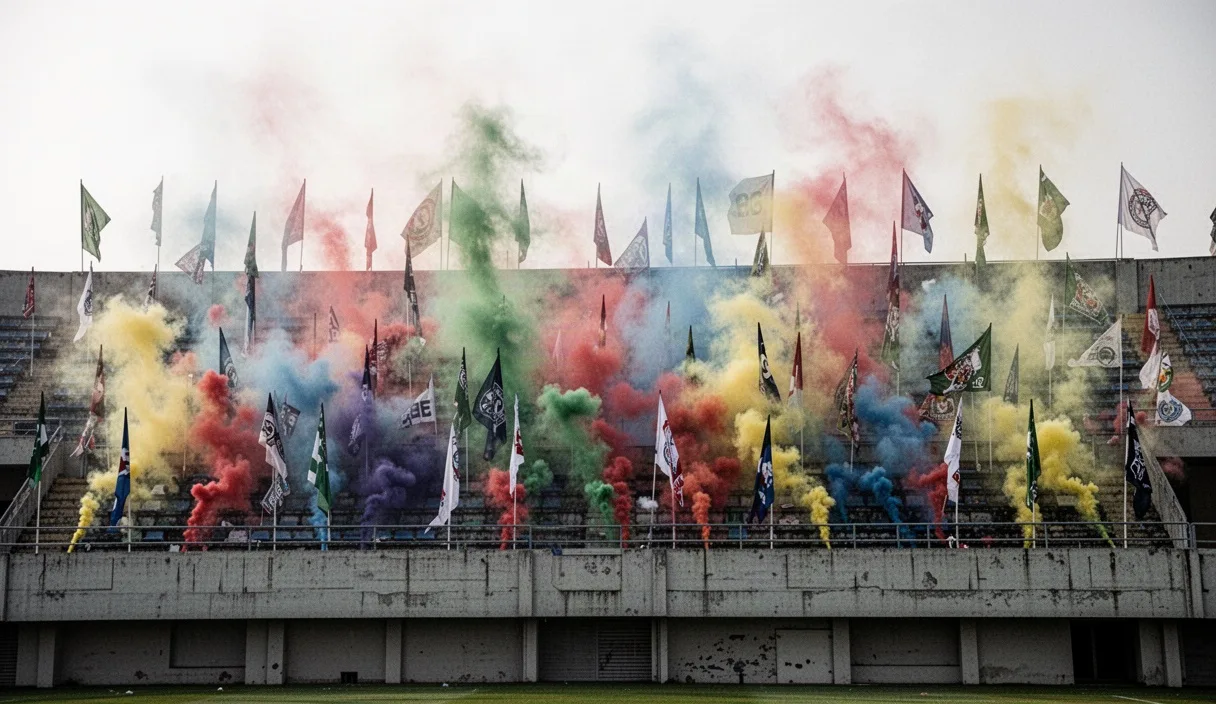
The noise level shifts too, and not just in volume but in timing. Regular matches tend to build noise gradually, with chants picking up after a goal or a big tackle. Derby matches often start loud from the moment teams walk out and stay elevated throughout, with rival supporter groups engaging in call-and-response chanting that can last uninterrupted for ten or fifteen minutes at a stretch. Ultras groups in Italy and Turkey are particularly known for choreographed displays, called tifo, that cover entire stand sections before kickoff.
Security presence also increases noticeably. For a fixture like the Manchester derby, police forces typically deploy additional officers around the stadium perimeter and coordinate travel corridors to keep rival fan groups separated before and after the match. In some historically volatile fixtures, such as certain Balkan derbies, away fans have at times been banned entirely from attending for safety reasons, a decision made by local football federations rather than the clubs themselves.
Local businesses feel the shift as well. Pubs near Anfield or Goodison Park report their busiest trading hours of the entire season on Merseyside derby day, often opening two to three hours earlier than usual to accommodate fans arriving well ahead of kickoff.
Tactical Changes Teams Make for Rivalry Games
Coaches frequently deviate from their standard game plan for derby fixtures, prioritizing physical duels and defensive solidity over the expansive style they might use in a regular league match. It's common to see a manager select a more experienced, physically robust midfield pairing specifically for a derby, even if that means benching a more technically gifted but younger player who hasn't yet proven he can handle the intensity.
Set-piece preparation often gets extra attention too, since derbies are frequently tighter, lower-scoring affairs where a single dead-ball situation can decide the outcome. Some clubs bring in additional set-piece coaching sessions in the days leading up to a rivalry match, focusing specifically on defending corners and free kicks given how crowded and chaotic these fixtures tend to become.
Substitution patterns can shift as well. Managers sometimes hold back attacking substitutes longer than usual in derbies, wary of losing defensive shape, and instead bring on a defensive midfielder earlier if the match becomes stretched. This is a tactical trade-off: prioritizing not losing over trying to win outright, especially away from home.
- Selecting physically dominant midfielders over technically flashy alternatives
- Extra set-piece defense drills in training during derby week
- Conservative substitution timing to protect defensive structure
- Increased scouting focus on the opposition's set-piece takers and long throws
Media Coverage Differences
Broadcast scheduling reflects derby importance well before the match itself. Domestic and international broadcasters typically slot high-profile derbies into the most valuable weekend windows, often the Sunday afternoon or evening kickoff slot that draws the largest television audience. El Clásico, for instance, is almost always given a standalone broadcast slot rather than sharing a time window with other La Liga fixtures.
Pre-match build-up coverage extends far beyond a typical matchday. Sky Sports and BT Sport, now TNT Sports in the UK, have historically dedicated multi-day feature packages to fixtures like the North London derby between Arsenal and Tottenham, including studio debates, former player interviews, and historical retrospectives that simply don't happen for a routine midweek fixture against a team from the other end of the table.
Newspaper back pages and digital sports outlets also shift tone. Reporting on regular matches tends to focus on league table implications and individual player form. Derby coverage leans more heavily into narrative and history, referencing previous flashpoints, player transfers between the two clubs, and manager quotes that get picked apart for perceived disrespect toward the rival. A single offhand comment from a manager in a pre-derby press conference can dominate headlines for days in a way that wouldn't happen before a regular fixture.
What Fans Should Expect Attending One
First-time attendees should plan to arrive at the stadium significantly earlier than they would for a standard match, ideally two hours before kickoff rather than the usual 45 minutes to an hour. Security checks tend to be more thorough, and stadium approaches can become congested as police manage separate routes for home and away supporters.
Ticket prices for derbies typically run higher than standard league matches, sometimes by a noticeable margin depending on the club and market demand. It's worth checking directly with the club's ticket office or official resale platform, since third-party resale sites can charge well above face value for these fixtures.
Wearing rival colors in the wrong section is a genuine risk in some derbies, not just a social faux pas. In fixtures with a history of crowd trouble, stadiums often enforce strict segregation and may deny entry to anyone displaying colors in the wrong stand. If you're unsure of a specific club's policy, contacting the ticket office ahead of time is the safest approach.
Noise levels can be genuinely startling for someone used to quieter matches, so earplugs are a reasonable thing to bring if you're sensitive to sustained loud noise for ninety minutes or more.
Common Mistakes
One frequent mistake is assuming a derby will be a high-scoring, open game because both teams are talented. In reality, many derbies are cagier and lower-scoring than regular fixtures because both sides prioritize not losing over free-flowing attacking football.
Another common error is underestimating travel and arrival times. Roads and public transport near derby stadiums often become congested well before kickoff, and arriving with only 30 minutes to spare can mean missing the opening whistle entirely.
Fans sometimes also misjudge the appropriate away-day behavior for historically tense fixtures. It's worth researching a specific derby's history, particularly for rivalries with known segregation rules or past incidents, rather than assuming general football etiquette applies uniformly everywhere.
Getting the Most Out of Your First Derby
If you're planning to attend a derby for the first time, start by researching the specific fixture's history, since the context behind Celtic versus Rangers is very different from, say, Roma versus Lazio in Rome. Understanding the backstory makes the chanting, banners, and pre-match tension make a lot more sense once you're inside the ground.
Buy tickets directly through the club or an officially licensed reseller, check the stadium's segregation and colors policy in advance, and plan to arrive at least two hours before kickoff. If you're attending with limited football experience, consider going with someone who's been to that specific derby before, since local knowledge about which entrances, pubs, or transport routes to avoid can make the day far smoother.