
Walk into a stadium thirty minutes before kickoff and you might see a section of the crowd suddenly transform into a giant image: a crest, a slogan, a portrait of a club legend, all rendered in cardstock and fabric held up by a few thousand pairs of hands. That's a tifo, and it looks like magic from the stands. It is not magic. It is months of quiet, unglamorous work by people who cut paper, argue about paint colors, and count out cable ties in someone's garage.
This piece pulls back the curtain on how ultras groups actually pull these displays off, from the first sketch to the final cleanup. It is not a guide to making tifo yourself, since group customs, stadium rules, and safety requirements vary enormously by country and club. Think of it as a backstage tour, useful if you are a curious fan, a journalist covering fan culture, or someone trying to understand why a supporters' group treats a 90-second reveal like a small military operation.
What a Tifo Actually Is
Tifo (from the Italian "tifosi," meaning fans) refers to any large-scale visual display coordinated by supporters, usually unveiled in the moments before a match or during a specific chant. It ranges from a single giant banner stretched across a stand to a full "card stunt" where thousands of individual fans hold up colored placards that combine into one image when viewed from the opposite side of the stadium.
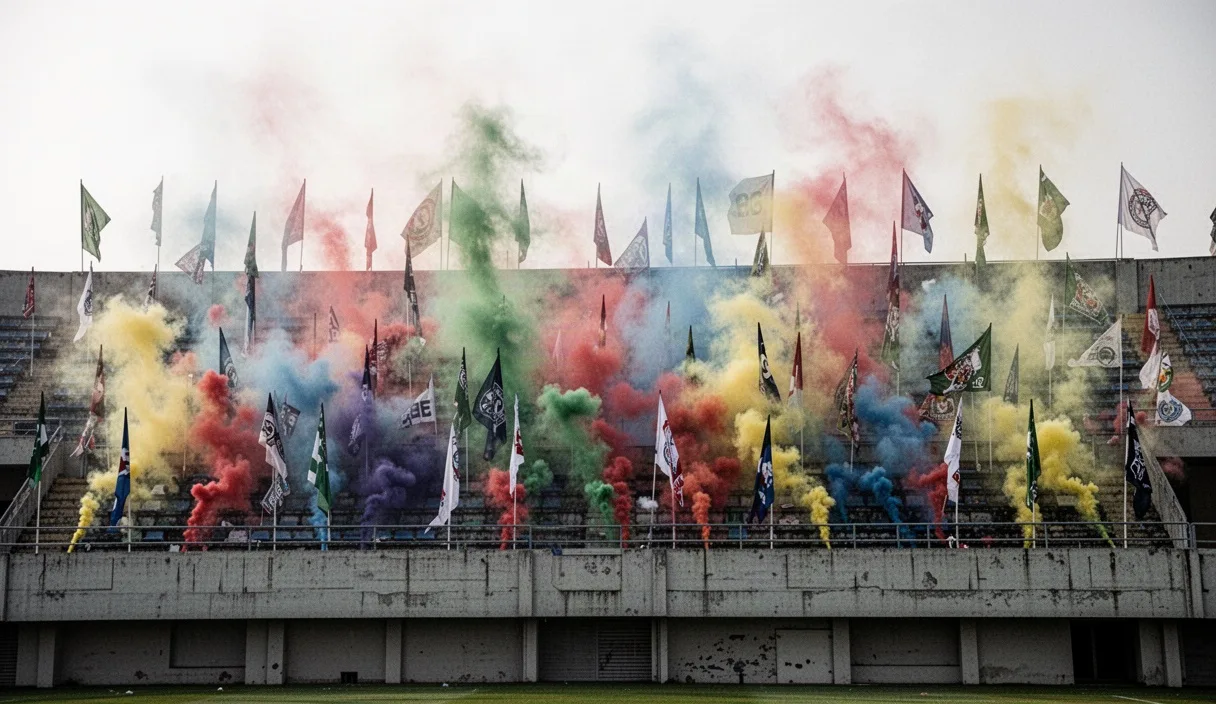
There are generally three families of tifo. Flag tifo uses one enormous fabric sheet, sometimes over 100 feet wide, passed hand-to-hand and unfurled in seconds. Card or mosaic tifo relies on individual spectators each holding a small paper or plastic card, with the pattern only readable from a distance. Pyro-integrated tifo combines smoke, flares, or confetti with the visual display, though this category runs into the strictest legal trouble since pyrotechnics are banned in most professional stadiums without special dispensation.
Groups also distinguish between a "welcome" tifo, shown as players enter the pitch, and a "derby" or "anniversary" tifo reserved for rivalry matches or club milestones. A derby display might take three times longer to plan than a routine home game banner, since the stakes and audience size are higher.
Planning Timeline Before a Big Match
Serious tifo groups start planning weeks, sometimes months, before the match date. A card mosaic covering an entire stand for a title-deciding fixture is not something you sketch the night before.
- 8 to 12 weeks out: Concept meetings. Someone proposes an idea, usually tied to a club anniversary, a rival's history, or a current storyline in the league. The group votes or a small "creative cell" decides.
- 6 to 8 weeks out: Design finalized, often using simple grid software or even spreadsheet templates where each cell represents one card or one section of fabric.
- 4 to 6 weeks out: Materials ordered. Paper stock, paint, cable ties, and fabric get sourced, frequently from print shops that give supporters' clubs a bulk discount because they know the order size.
- 2 to 3 weeks out: Assembly days. Volunteers gather in warehouses, garages, or borrowed community halls to cut, paint, and bundle materials.
- Final week: Logistics confirmed with the stadium: entry points for oversized bags, timing windows, and steward briefings.
- Match day: Distribution to seats, usually 45 to 60 minutes before kickoff, followed by the reveal itself.
Groups preparing for European away trips face a tighter and riskier timeline, since materials sometimes have to be transported across borders and cannot always be pre-positioned at the visiting stadium. Some clubs' supporter groups have reported customs delays holding up banners for hours, which is why experienced groups build in a buffer day whenever international travel is involved.
Materials and Logistics Involved
The material list for a mid-sized card tifo covering 3,000 seats is longer than most people assume. A rough shopping list includes:
- Cardstock or corrugated plastic sheets, cut to a uniform size, often 30 x 40 cm
- Weatherproof paint or pre-printed vinyl overlays
- Numbered distribution bags or envelopes, one per seat, so volunteers know exactly which card goes where
- Rope, cable ties, or grommets for flag-style tifo that needs to withstand wind
- Storage crates, since a finished mosaic for a large stand can fill a moving van
Storage is a bigger headache than most outsiders expect. A group in Germany once described keeping finished tifo material in a rented shipping container because no single member's apartment could hold it. Fabric tifo in particular needs dry, temperature-stable storage, since damp conditions cause mildew that ruins colors within a season.
Transport to the stadium is its own logistical puzzle. Most stadiums restrict what oversized items can be brought in, requiring pre-approval and a specific delivery time, often via a loading dock rather than the general turnstiles. Groups typically assign two or three members purely to liaise with stadium security on the day, walking the materials in section by section so nothing gets flagged as suspicious or held up at a bag check.
Coordinating Hundreds of Participants
A tifo is only as good as its weakest row. If forty people in one section hold their card upside down or a beat too late, the whole image blurs. Coordination usually happens on three levels.
First, there is the "capo" or section leader system, where one person per block of roughly 50 to 100 fans is responsible for signaling when to lift, hold, and lower the material. These leaders often rehearse hand signals separately from the general membership, sometimes the week before, in an empty stand or even a parking lot using placeholder objects.
Second, timing cues come from a whistle, a drum pattern, or a specific chant line that everyone recognizes regardless of language, useful for international away days where not every traveling fan speaks the home language. Third, distribution has to be exact: cards are numbered and matched to seat numbers ahead of time, since a mosaic reads correctly only if each card lands in its assigned spot.
| Display size | Approx. participants | Typical prep crew |
|---|---|---|
| Single flag/banner | 10 to 30 (holders) | 5 to 10 people, 1 to 2 weeks |
| Section mosaic | 500 to 2,000 | 15 to 25 people, 4 to 6 weeks |
| Full-stand mosaic | 3,000 to 15,000+ | 30 to 60 people, 8 to 12 weeks |
Rehearsal is limited by the simple fact that you cannot fill an actual stadium stand to practice. Some groups substitute smaller test runs, having 50 volunteers practice the lift-and-hold motion in a gym, then trust the capo network to scale that motion up on the day.
Rules Stadiums Impose on Displays
Stadium management and league bodies do not let supporters bring in whatever they want. Most professional leagues, including UEFA-regulated competitions, require advance written notice of any large display, sometimes 48 to 72 hours before kickoff, describing dimensions, materials, and whether anything will obstruct sightlines or emergency exits.
Common restrictions include:
- No pyrotechnics or open flame, even sparklers, without special permit; violations often result in club fines from the league, not just the individual fan
- Height and width limits so banners do not block adjacent sections' views or safety signage
- Fire-retardant material requirements for anything covering a large surface area
- Time limits, often requiring full removal of flag-style tifo within 60 to 90 seconds so it doesn't delay kickoff
- Bans on political or discriminatory imagery, enforced with fines and occasionally partial stadium closures for repeat offenses
Clubs act as an intermediary in most cases, since the supporters' group itself usually isn't the entity holding the stadium contract. This means a club's matchday operations staff often reviews and approves designs before they ever reach league officials, adding another layer of back-and-forth in the weeks before a big display. If you are part of a group planning something for the first time, checking directly with your club's supporter liaison officer is the realistic starting point rather than guessing at league rules yourself.
Why Groups Invest So Much Effort
None of this happens because anyone is paid to do it. Tifo culture runs almost entirely on volunteer time and self-funded materials, sometimes with costs split through membership dues or one-off crowdfunding within the group.
The motivation is largely about identity and pride, showing a rival end or a broadcast audience that the supporters' section is organized, creative, and deeply invested in the club's story. A well-executed full-stand tifo also functions as a kind of signature, something opposing fans and journalists remember and associate with that specific group for years, similar to how a distinctive chant becomes tied to a particular stand.
There's also a community-building side that outsiders rarely see. The cutting-and-painting sessions in warehouses double as social gatherings, sometimes the only time during the season when younger and older members of a supporters' group work side by side on something other than watching the match itself.
Common Mistakes
Groups new to large-scale tifo tend to run into the same problems repeatedly. Underestimating storage needs is one, ending up with finished materials crammed into someone's spare room where humidity or pests damage them before matchday. Skipping the stadium notification window is another, which can result in a display being confiscated at the gate even after weeks of work. Poor card numbering is a frequent culprit behind blurry mosaics, usually traced back to volunteers handing out envelopes without double-checking seat-to-number matches. Finally, groups sometimes design something visually striking but forget to test how it reads from the opposite stand, only to discover on the day that the image is unrecognizable from field level or on television.
Getting Started or Learning More
If you want to understand tifo culture more deeply rather than attempt one, start by reaching out to your club's official supporters' group or fan liaison officer, most of whom are glad to explain their process to genuinely curious fans. Attending an open assembly day, if your local group holds one, is the fastest way to see the cutting, painting, and numbering work firsthand. And if you are ever tempted to organize something yourself, treat the stadium's supporter liaison office as your first phone call, not your last, since display approval, fire safety compliance, and league notification periods are not areas where guessing is a good idea.