
Most people watching football keep their eyes glued to the ball, which makes sense, because that's where the action supposedly is. But if you want to understand why a goal actually happened, or why a team's attack kept breaking down, you need to train your eyes to look somewhere else entirely: at the players who don't have the ball. That's where games are genuinely won and lost.
This isn't about becoming a scout overnight or memorizing tactical jargon. It's a skill you build with practice, a bit of patience, and knowing where to point your attention. Below is a practical guide to watching off-ball movement, whether you're at a stadium, on a couch with a remake, or breaking down clips on your phone.
Why Off-Ball Movement Matters
A player has the ball for roughly 1 to 3 minutes of total possession time in a 90-minute match, depending on position and role. That means for the other 87 to 89 minutes, every single player on the pitch is doing something without the ball, or at least they should be. Strikers make runs to drag defenders out of position, midfielders shift to create passing lanes, and defenders adjust their line to compress space. All of it happens before the pass you actually notice.
Think about a striker scoring a tap-in from six yards out. The pass looked simple, almost lazy. But the striker's run started 4 or 5 seconds earlier, timed to beat the offside line and arrive at the exact moment the ball was played. Miss that run, and the goal looks like luck. Watch it, and you see a rehearsed pattern that the team probably drills every week.
Coaches and analysts spend most of their film sessions studying exactly this. Broadcast cameras, unfortunately, are built to follow the ball, so they train them elsewhere, often using tactical cams or wide-angle replays. You can do a version of this yourself, and it changes how you experience a match almost immediately.
Where to Look When You Don't Have the Ball
The trick isn't staring at all 20 outfield players at once, that's impossible and exhausting. Instead, pick a zone and follow it for a set stretch of play, then shift your focus. Here's a simple rotation that works well for most matches:
- Third man runs: Watch the player two passes away from the ball, not one. That third player often makes the run that breaks a defensive line.
- The far side winger: While everyone watches the ball on one flank, the winger on the opposite side is usually adjusting his position to stay onside and stretch the pitch.
- The holding midfielder: When his team has the ball, watch how he angles his body to receive a pass under pressure, or how he shields the space in front of the back line.
- Full-backs during buildup: Notice when they push high and when they hold back. This tells you a lot about how much risk the team is willing to take.
A useful habit: for the first 15 minutes of a half, deliberately ignore the ball and pick one player to shadow. It feels strange at first, almost like you're missing the match, but you'll start noticing patterns like a player consistently checking his shoulder before receiving, or a fullback who always overlaps on one specific trigger.
Tracking Runs Into Space
Runs into space fall into a few recognizable categories, and once you can name them, you'll spot them faster in real time.
| Run Type | What to Watch For | Common Example |
|---|---|---|
| Diagonal run | Player moves from wide to central, or vice versa, to lose a marker | A winger cutting inside behind the center-back |
| Blind-side run | Attacker moves into the defender's peripheral blind spot | A striker looping behind a center-back who's watching the ball |
| Overlap | A player runs outside a teammate who has the ball | A fullback sprinting past a winger holding the ball on the touchline |
| Underlap | A player runs inside a teammate who has the ball | A midfielder cutting between the fullback and the winger |
To actually track these live, focus on the moment just before the pass is released, not after. Most viewers watch the pass travel through the air and then look up to see who received it. Instead, watch the runner's first two steps. That's usually when you can tell whether the run is timed correctly or whether the player has mistimed it and will be flagged offside.
A good reference point: watch how many times a striker checks his run, meaning he starts moving, stops, and restarts to manipulate the defender's timing. Strikers like this create separation without ever sprinting in a straight line. It's subtle, but once you spot it, you'll see it constantly.
Watching Defensive Shape Shifts
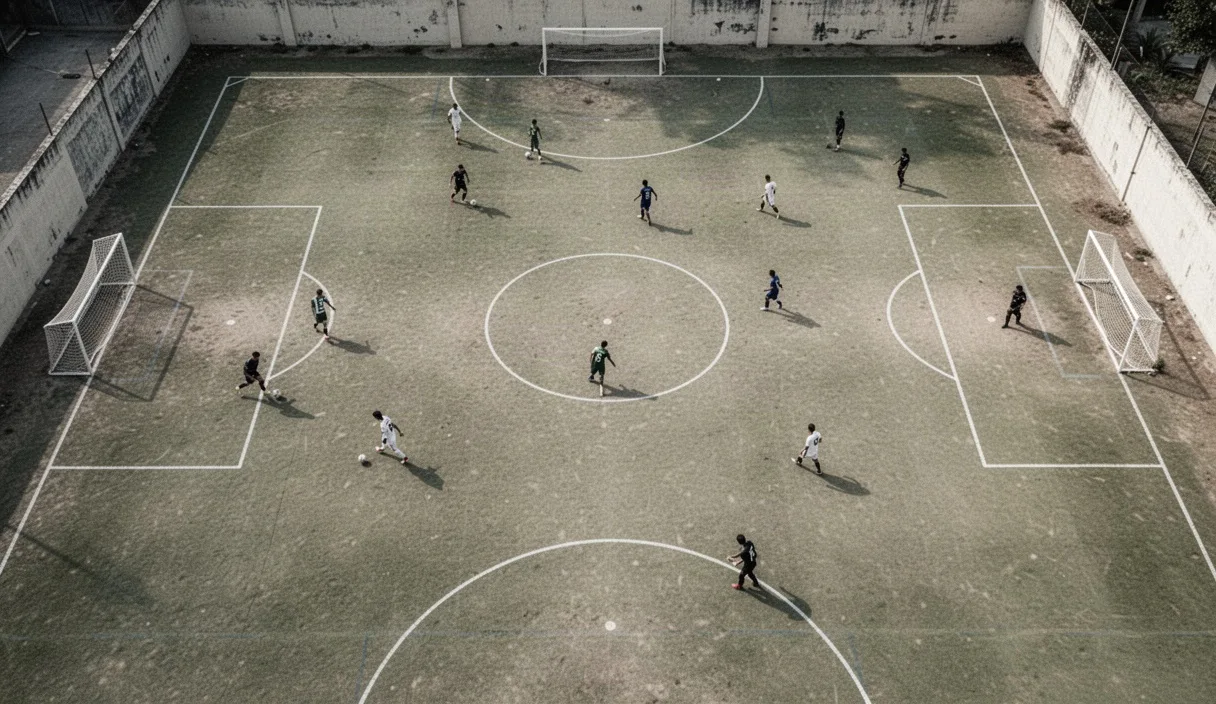
Defending is not really about individual duels, it's about a unit moving together, and this is arguably the most rewarding thing to track once you get the hang of it. When the ball moves from one side of the pitch to the other, watch the back four (or back three) shift as a block, almost like they're connected by a rope. A good defensive line moves 8 to 12 yards across the pitch in response to a single switch of play, staying compact and cutting off passing angles.
Here's a simple way to practice this: pick a defender, not the one nearest the ball, and watch how far he shifts every time possession changes flanks. If he's slow to adjust, gaps open up between him and his teammates, and that's usually where the next dangerous pass gets played.
Pressing triggers are another layer worth watching. Some teams press the instant the ball is played backward, others wait for a specific pass, like a fullback receiving under pressure near the touchline. Watching the front three or four players' first movement after a trigger tells you a lot about how organized the pressing structure actually is.
A practical example: in a mid-block defensive setup, watch the distance between the last defender and the goalkeeper. If that gap stays around 15 to 18 yards, the team is generally well organized. If it stretches past 25 yards regularly, that's often where through-balls start finding success.
Simple Drills for Training Your Eye
You don't need special software to get better at this, just repetition and a bit of structure.
- The freeze-frame method: Pause a broadcast the moment a pass is played, and before pressing play, guess where the two nearest off-ball players will move. Then watch and check yourself.
- Single-player tracking: Pick one player and follow only him for a full 10-minute stretch, ignoring the ball entirely unless he's involved. Jot down what he does when his team has possession versus when they don't.
- Sound-off viewing: Turn off commentary for 15 minutes. Commentators naturally direct your attention to the ball, and removing that voice forces your eyes to wander more independently.
- Second-screen review: Watch a match live, then rewatch a specific 5-minute sequence the next day focusing purely on movement patterns you missed the first time.
These drills sound almost too simple, but the consistency matters more than the complexity. Doing the freeze-frame drill for just 20 minutes a week over a month tends to sharpen recognition noticeably, according to informal feedback from amateur coaches who use similar exercises with youth players.
Tools That Help Rewatch Footage
Live viewing has limits, since you physically can't rewind a stadium seat. Rewatching footage, even basic broadcast replays, opens up a lot more detail.
- Slow-motion replay controls: Most streaming platforms let you slow playback to half speed or quarter speed. This is genuinely useful for spotting the first step of a run rather than the finished product.
- Tactical camera angles: Some broadcasters and analysis platforms offer a wide, elevated camera view built specifically for tracking shape and movement rather than following the ball. If available, this is the single best tool for off-ball tracking.
- Frame-by-frame scrubbing: Video editing apps, even free ones, let you scrub through footage frame by frame, which is helpful for studying exact timing on runs and pressing triggers.
- Note-taking apps synced to timestamps: Jotting quick notes with the match clock attached lets you build a simple log of patterns over a season, like how often a certain winger cuts inside versus staying wide.
None of this requires professional-grade software. A basic video app and a notebook will get you most of the way there. The goal isn't to build a scouting database, it's to train your own eye to notice things automatically, without needing to pause and rewind every time.
Common Mistakes
The most frequent mistake is trying to watch everything at once, which usually means watching nothing well. Narrowing focus to one player or one zone at a time works far better than scanning the whole pitch. Another common issue is only watching off-ball movement during attacking sequences and ignoring it defensively, when the two are deeply connected. Lastly, people often judge a run purely by whether it "worked," meaning did it result in a goal, rather than judging whether it was well-timed and smartly positioned regardless of outcome. A perfectly timed run that doesn't get the pass is still a good run.
Next Steps
Start small. Pick one match this week, choose a single player who isn't a striker or a star, and follow him for just 15 minutes without watching the ball. Write down three things he does that surprised you. Do this a few times over the coming weeks, rotating positions, defenders one match, midfielders the next, wingers after that. Over time you'll find yourself noticing these patterns automatically during normal viewing, without the deliberate effort. It won't happen instantly, and that's fine, this is a skill built through repetition rather than a single insight.